Vanuatu Reef Reserve Resort
A conservation-first resort design inspired by large reef-island opportunities in Vanuatu, where small hospitality nodes exist to fund marine protection.
SOVEREIGN REEF · VANUATU
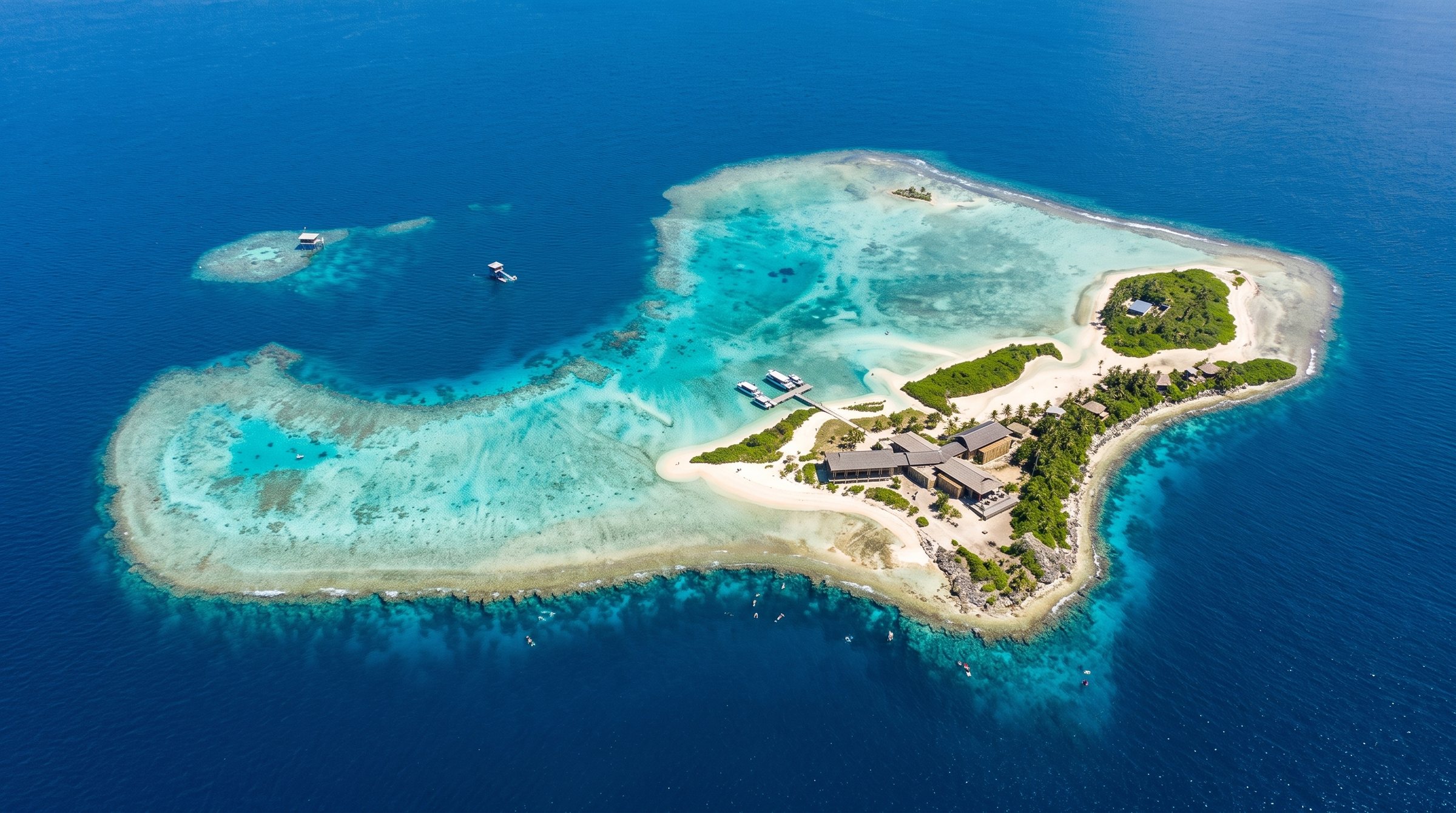
On this island, the reef is the main story and the resort is the footnote that pays for it.
Sovereign Reef Island appears in public private-island listings for Vanuatu as a large-acreage opportunity with limited public detail, so this concept is deliberately cautious, phrased as a design inspired by large reef-island opportunities in the region. Nothing is assumed: no beaches, lagoons, reef openings or infrastructure are taken as given without survey. The island is treated as a private reef reserve carrying small hospitality nodes: an arrival and research house, a dive base and a few villa clusters, whose revenue funds monitoring and protection. Large no-build zones are designed first. Power, water, wastewater and waste run as self-contained micro-infrastructure. At 20–50 keys with no mass tourism and no large marina, the resort stays small enough to keep its promise.
| Location | Sovereign Reef Island, Vanuatu |
|---|---|
| Site | Large-acreage reef island; limited public detail, all features subject to survey |
| Programme | 20–50 keys as distributed micro-lodges; research and dive centre; large no-build conservation zones |
| Identity | Private reef reserve funded by ultra-low-density hospitality |
| Status / Context | Appears in public listings with limited detail; concept framed as inspired by the opportunity, unverified on the ground |
| Stage | Resort design — architecture, structure, MEP, BIM |
Verify first. Then design small.
§03 — Masterplan strategyThe masterplan begins with what it refuses to assume.
Survey precedes design: bathymetry, coral and reef mapping, habitat and freshwater studies before any siting decision. Large no-build zones are fixed early and hold. Hospitality lands as several small pavilion nodes rather than one consolidated resort, and marine monitoring is woven into the guest programme so conservation is the identity, with diving and research as its public face. Every utility — power, water, wastewater, waste — is self-contained, low-impact and sized to the nodes it serves.
Verify Before Designing
No beaches, lagoons, reef openings or infrastructure are assumed without survey. Coral and reef surveys are mandatory, and lease, title and customary rights review come before any drawing earns the name masterplan.
Conservation Zones
Large no-build zones are established at the outset and treated as permanent. Turtle nesting grounds, reefs, mangroves and fisheries, where present, are protected outright and mapped before anything else is placed.
Small Nodes
Several small pavilion clusters replace the single big resort: an arrival and research house, a dive base and a few villa groups. Each node is sized for low-impact foundations, phased delivery and, if needed, quiet reversibility.
Research Integration
Marine monitoring, dive education and a working reef lab sit inside the hospitality programme. Guests fund the science and are invited to watch it done; the reserve's credibility becomes the resort's brand.
Infrastructure Autonomy
Power, water, wastewater and waste run as self-contained micro-infrastructure at each node: solar plant, treatment, low-light systems. Nothing discharges to the reef, and no dredging or reclamation appears in the initial concept.
The Reef Reserve House.
§04 — The iconic pieceA central pavilion that feels like a refined research lodge.
The Reef Reserve House gathers arrival, restaurant, research lounge, dive centre, marine education room, reef lab, a small spa, an observation deck and a shaded terrace into one working building. Its atmosphere is that of a field station with excellent food: charts on the walls, tanks by the door, the day's reef observations posted where the cocktails are served. Everything the reserve does is visible from the dining table.
Timber pavilions on stone and concrete plinths with cyclone-rated roofing, marine-grade metal and composite decking: low-rise, cyclone-resistant and buildable with barge-delivered components. Low-impact foundations and low-light systems keep the building consistent with the reserve it exists to serve.
Architecture, engineering, ecology.
§05 — The technical layersConservation modernism
Light timber pavilions with durable roofs, shaded decks and woven screens, planned reef-first. The research lodge atmosphere is deliberate: buildings read as instruments of the reserve, comfortable enough for long stays and modest enough to be forgiven by the landscape.
Low-impact, cyclone-resistant
Low-rise structures on stone and concrete plinths with low-impact foundations, marine-grade connections and cyclone-rated roofs. Seismic, tsunami and cyclone risk are all design inputs, and every structure is sized for phased delivery once surveys confirm the ground.
Micro-infrastructure per node
Each node carries its own solar power, water treatment, wastewater and waste handling, with environmental monitoring infrastructure built in. Nothing discharges to the reef; DEPC and EIA processes with an EMMP are assumed for any approval path.
Masterplanning the unbuilt
Conservation masterplanning is documented with the same rigour as construction: no-build zones, monitoring points, phased micro-lodges and off-grid systems coordinated in one model, so the reserve's commitments are as traceable as its buildings.
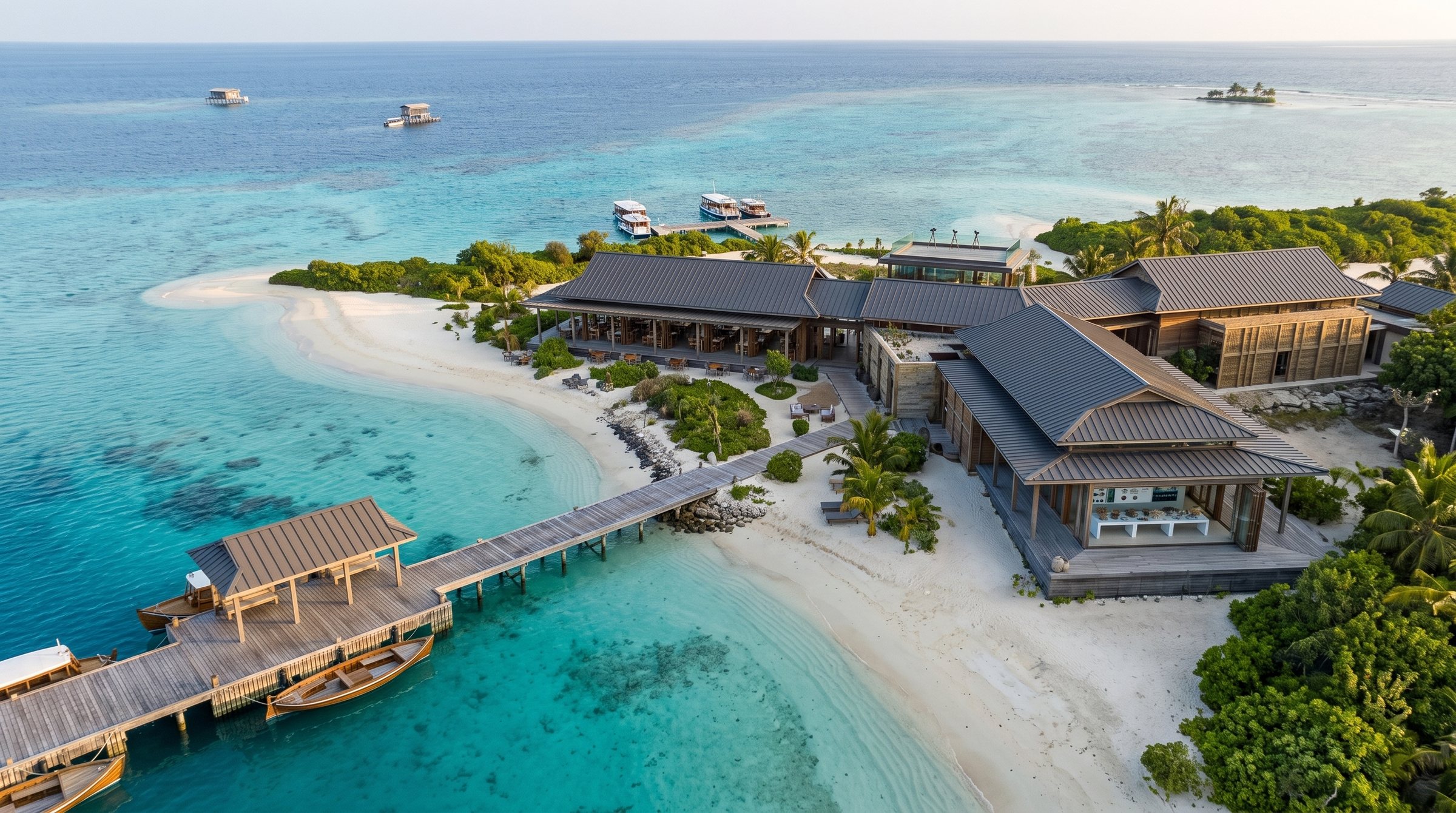
The most important lines on this masterplan enclose what it will never touch.
Designing with limited information is its own discipline: cautious claims, survey-led sequencing, reversible moves. This design practises restraint as a technical skill. Public detail on Sovereign Reef Island is limited, so this concept is framed as inspired by large reef-island opportunities in Vanuatu and asserts no specific site features. It is an independent, unaffiliated concept; lease and customary rights review, DEPC and EIA processes and community consultation would govern any real project.
If a project here became live, we would work as the technical partner alongside the licensed local consultants who carry statutory responsibility in the jurisdiction — the architect of record, structural checkers, MEP and utilities engineers, and the environmental, coastal and fire specialists the approvals require. Our role is design, structural engineering, MEP coordination, BIM and construction-oriented documentation.