Bora Bora Twin-Site Lagoon Repair Resort
A closed twin-site hotel asset, main island plus private motu, reworked as a lower-density resort organised around lagoon repair: fewer keys, stronger infrastructure and restored coral.
BORA BORA · TWIN-SITE RECOVERY
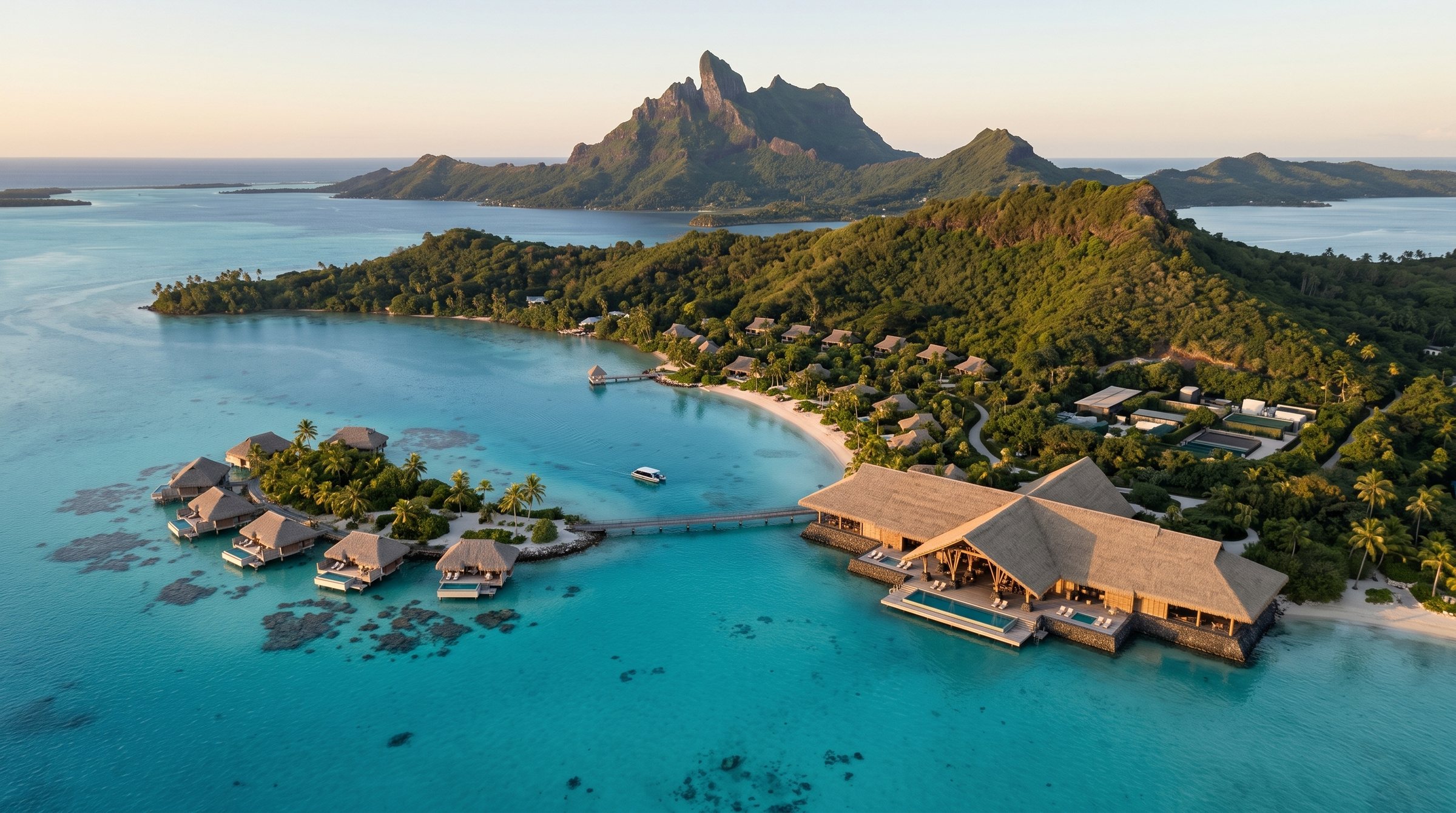
In Bora Bora, the most valuable thing a resort can build is a healthier lagoon.
Bora Bora is a mature destination with a fragile lagoon. It carries closed resorts, ageing hotel infrastructure, intense visual expectations and strict marine-domain rules, all within a coral system that registers every pile and every outfall. Among its stranded assets are twin-site properties: a main-island resort paired with a private motu across the water. This design takes that typology and reverses the usual instinct. Instead of rebuilding the old density, it audits everything, removes unsafe lagoon structures, shifts weight onto land, and reorganises the two sites so the main island works while the motu rests. The result is a smaller resort with better bones, and a lagoon that improves with every year the hotel operates.
| Location | Bora Bora, French Polynesia |
|---|---|
| Site | Twin-site hospitality asset: main-island grounds paired with a private motu across the lagoon |
| Programme | 45–70 keys across both sites; land-based garden suites, limited overwater units, spa and wellness, one lagoon-repair public pavilion |
| Identity | Lagoon repair resort in refined Polynesian modernism |
| Context | Typology inspired by closed twin-site assets in Bora Bora; all lagoon works sit in the public maritime domain and require French Polynesian authorisation |
| Stage | Concept design — architecture, structure, MEP, BIM |
Audit first, build less.
§03 — Masterplan strategyThe masterplan begins as an audit of everything already standing in the water.
Structural, marine and utility surveys come before any drawing. Existing buildings and platforms are classified for retention, repair, removal or replacement; unsafe lagoon structures go first. Guest weight shifts onto land, overwater spacing widens, and a coral garden spine threads restoration through the guest experience. Beneath it all, wastewater, water, energy and service logistics are rebuilt as one system, because a resort that repairs a lagoon has to stop leaking into it.
Audit and removal
Structural, marine and utility surveys map every building, pile and pipe, alongside coral and habitat. Each element is classified: keep, repair, remove or replace. Unsafe lagoon structures are taken out under controlled, sediment-free methods.
Two islands, two jobs
The main island carries arrival, reception, kitchens, staff facilities and the service dock. The motu carries silence: premium villas, spa, coral garden and sunset lounge. Logistics stay on one shore so the other can rest.
Rebuild less over water
The count of overwater units drops. Wider spacing restores views and water flow between structures, and new platforms appear only where they are legal, structurally sound and ecologically defensible.
Coral garden spine
A controlled restoration zone runs through the plan: coral nursery, marked snorkelling route and marine interpretation. Guests swim through the repair work, which is the point of the whole concept.
Land carries the luxury
Garden suites, hillside rooms and beach villas absorb the keys removed from the water. Beneath them, wastewater, potable water, energy and waste systems are rebuilt as a single engineered network.
The Lagoon Repair Forum.
§04 — The iconic pieceThe resort's most iconic building is the one that explains how the lagoon is being repaired.
The Forum is the symbolic and functional heart of the resort: part arrival lounge, part lagoon-facing restaurant, part working coral centre. Under one deep roof it gathers a marine education room, a water-quality display fed by live monitoring, a cultural storytelling room, the spa threshold, a small pool and a sunset deck, then hands guests to the pontoon for the crossing to the motu. Hospitality and repair share the same floor.
Technically it is a large protective roof doing familiar work: engineered timber with lightweight steel where spans demand it, marine-grade connections, and roof layers detailed for periodic replacement. Natural ventilation and rainwater collection are designed in, and the whole assembly is sized for cyclone uplift from the first sketch.
Architecture, engineering, ecology.
§05 — The technical layersRefined Polynesian modernism
Deep roofs, shaded decks, timber and volcanic stone, with coral-stone mineral textures and woven screens. Overwater structures are restrained; land buildings carry the character. The brief bans generic tropical-resort styling in favour of tactile, place-specific luxury.
Classify, then build lightly
Existing buildings, piles, caps and decks are audited for corrosion and capacity, then sorted: retain, strengthen, remove, replace. New overwater villas are lightweight, modular and prefabricated, with minimal pile footprints and removable inspection panels, so the lagoon is disturbed once and maintained forever.
A resort that stops leaking
No wastewater discharge into the lagoon, upgraded water and energy plants, a low-light night strategy and carefully routed boat logistics. Coral nurseries and continuous water-quality monitoring make environmental performance part of the guest experience, with live data shown in the Forum.
Phasing as a deliverable
The whole recovery is modelled in BIM: existing conditions, demolition sequencing, marine works and new construction in one coordinated dataset. That model drives the permit documentation French Polynesia requires — architectural, structural, infrastructure and environmental — and keeps a two-site logistics puzzle honest.
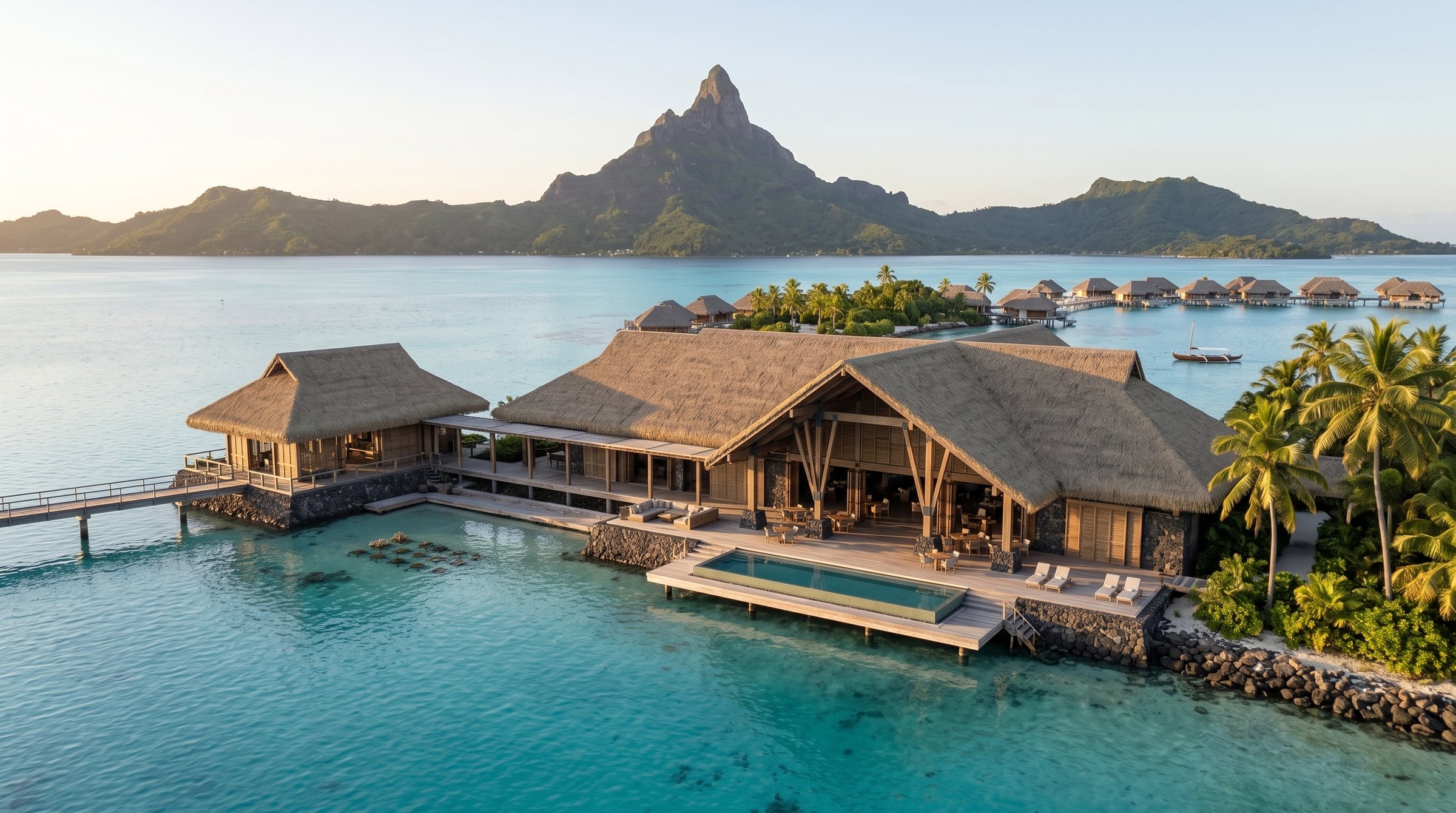
Not more bungalows. A better lagoon.
Twin-site recovery compresses the studio's whole method into one brief: audit, selective demolition, marine structures and phased logistics across water. It is the kind of problem where engineering discipline is the design. A resort design inspired by closed twin-site hotel assets in Bora Bora. A real project would require ownership verification, lagoon-domain authorisation, environmental assessment, cultural consultation and licensed French Polynesian consultants.
If a project here became live, we would work as the technical partner alongside the licensed local consultants who carry statutory responsibility in the jurisdiction — the architect of record, structural checkers, MEP and utilities engineers, and the environmental, coastal and fire specialists the approvals require. Our role is design, structural engineering, MEP coordination, BIM and construction-oriented documentation.