Spalathronisi Sithonia Marine Retreat
A marine retreat of 25–45 keys off the Sithonia coast, anchored by one building: a heavy stone base under a thin, sail-like roof, receiving guests straight off the water.
SPALATHRONISI · SITHONIA
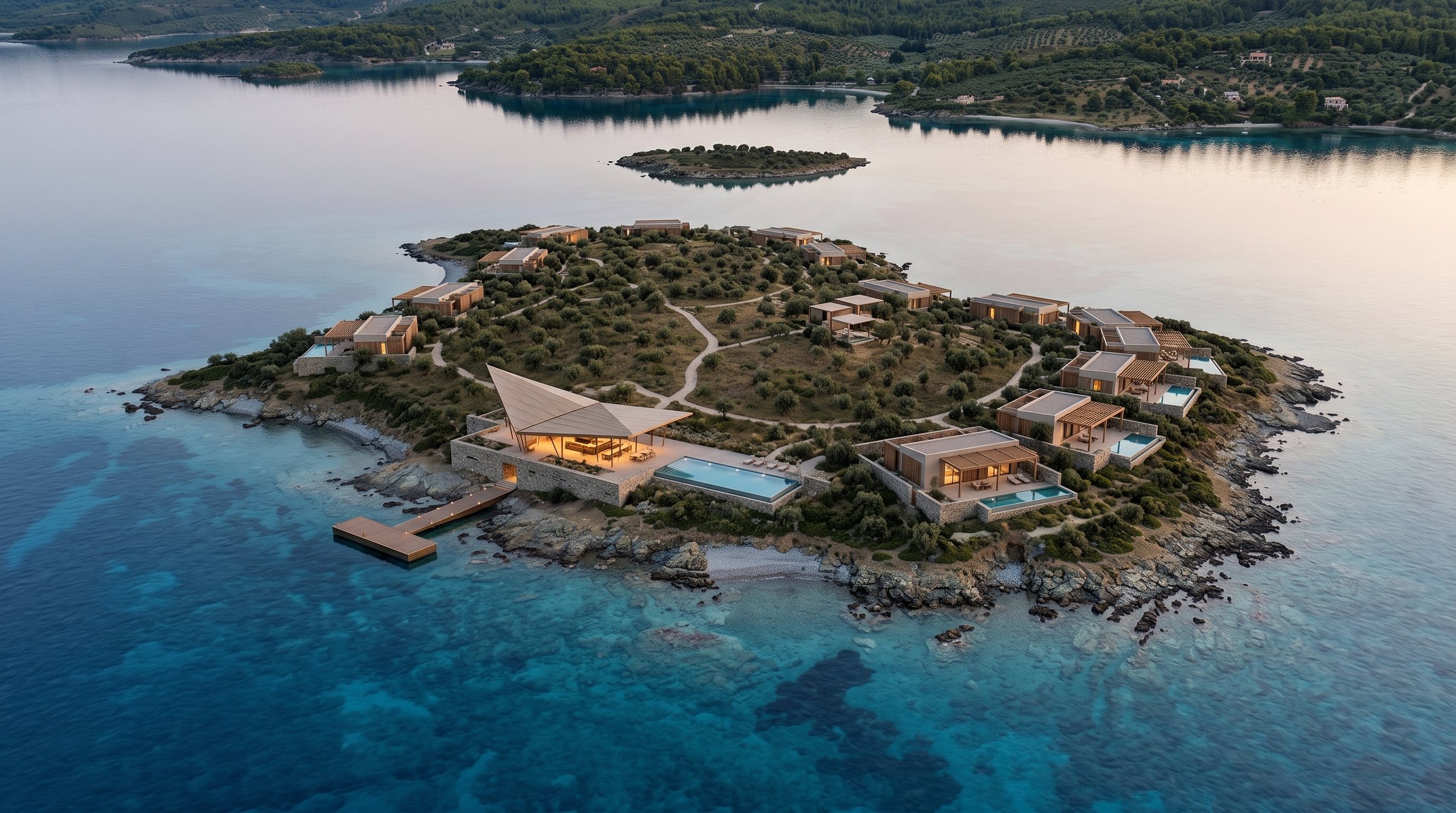
The first thing guests see is the building, and the building was designed for exactly that moment.
Spalathronisi sits within reach of the Sithonia coast, and everything in the design answers to the water: how guests arrive, where they dine, how boats are kept and how far the architecture is allowed to go. A single pier — small, with no marina and no aggressive yacht infrastructure — delivers guests to the Stone Sail Pavilion, the island's arrival moment and social heart in one. From there a loose ring of villas spreads around the perimeter, spaced by vegetation and topography, while a walking trail crosses the interior between viewpoints, spa and sunset point. At twenty-five to forty-five keys the operation stays simple: one restaurant heart, a discreet beach club, water sports and a compact, screened service pocket.
| Location | Island off Sithonia · Halkidiki, Greece |
|---|---|
| Site | A swimmable, sailable island; single small pier, perimeter villa ring, natural interior |
| Programme | 25–45 villas and suites, arrival pavilion, restaurant and bar, small spa, pool, water sports, nature trails |
| Identity | Marine boutique retreat — nautical in behaviour, never in decoration |
| Status & Context | Concept design for a Sithonia island setting; any development subject to Greek coastal regulations, environmental review and local consenting |
| Stage | In-house resort design — architecture, structure, MEP, BIM |
A marine heart and a villa ring.
§03 — Masterplan strategyOne iconic pavilion at the water, villas around the edge, a nature trail through the middle.
The plan is deliberately simple. A small, elegant pier handles guests, luggage and tender boats. The Stone Sail Pavilion concentrates reception, dining, bar, pool and the beach deck at the shoreline. Villas are spaced around the perimeter with vegetated gaps between them, a nature spine crosses the interior to viewpoints and the spa, and a compact service pocket keeps the technical life of the island out of sight.
Arrival Pier
A small, elegant pier handles guest arrival, luggage, tender boats and limited service access. There is no large marina and no hard yacht infrastructure; the coastline keeps its authority.
Marine Heart
Reception, restaurant, bar, lounge, pool and beach deck gather in and around the Stone Sail Pavilion, with a small sea-activity point alongside. One building carries the island's entire public life.
Villa Ring
Sea-view, family, wellness and owner villas sit around the perimeter, never continuously, each separated by vegetation and topography. A few premium edge villas take the finest positions without crowding them.
Nature Spine
A walking trail crosses the island's interior, linking viewpoints, seating, a small chapel or art pavilion where appropriate, the spa and the sunset point — slow infrastructure for the hours between swims.
Service Pocket
Staff support, kitchen back-of-house, storage, laundry, waste, water and energy occupy one compact, carefully screened pocket, with simple logistics and a clear fire and emergency access strategy.
The Stone Sail Pavilion.
§04 — The iconic pieceA heavy stone base under a thin, sail-inspired roof — arrival moment, restaurant and silhouette in a single structure.
The pavilion receives guests directly from the pier and holds the arrival lounge, restaurant, bar, sea-facing deck and a small pool or water court under one roof. The base is heavy local stone, rooting the building in the island; the roof is thin, light and abstract — a structural echo of sailcloth, refined and unthemed. From the water it reads as the island's silhouette; from inside, as deep shade over the sea.
The engineering is legible: a lightweight long-span roof on a masonry and concrete base, detailed for wind exposure with corrosion-resistant connections throughout — the standard discipline of building thin structures beside salt water. Everything else on the island stays low-rise and conventional, which keeps construction logistics simple.
Architecture, engineering, ecology.
§05 — The technical layersMarine Mediterranean modernism
Stone and shade below, light timber roofs above. Halkidiki stone, warm timber, mineral plaster, muted concrete and dark bronze metal, with rope and woven textures used sparingly. Low volumes and steady geometry keep the island's profile intact from every approach.
Built for wind and salt
The pavilion's lightweight roof is engineered for wind exposure, with corrosion-resistant metal connections specified from the start; villa structures stay low-rise and simple. The structural ambition is concentrated where it earns its keep: in one roof.
Semi-off-grid by design
Off-grid and semi-off-grid systems: rainwater collection and water storage, wastewater treatment, solar integration and deliberately simple service logistics. Fire and emergency access is drawn into the masterplan from the first sketch, sized for an island reached by boat.
One island, one model
Pavilion roof geometry, villa types, service pocket and pier are developed in a coordinated BIM environment, giving the concept quantities, phasing and clash discipline early — and giving licensed local consultants documentation they can actually take through Greek approvals.
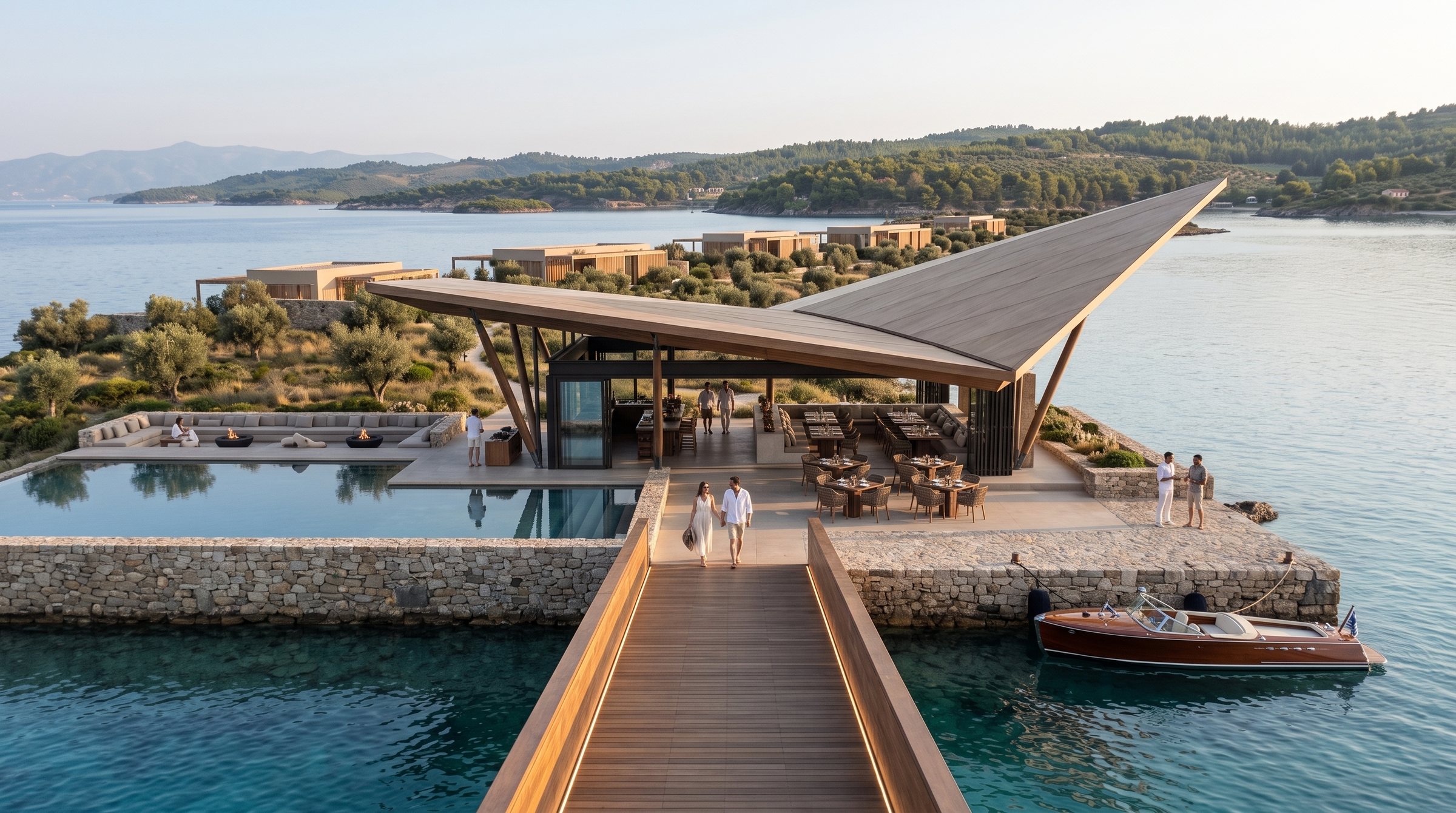
A heavy base to hold the island; a light roof to hold the wind.
Spalathronisi pairs a memorable architectural object with a plainly workable resort logic — proof that the studio can design an icon and detail it to survive wind and salt. A concept design, unconnected to any owner, broker, operator or authority in Halkidiki. Any real project would require ownership verification, Greek coastal-zone and environmental review, and licensed local consultants from the outset.
If a project here became live, we would work as the technical partner alongside the licensed local consultants who carry statutory responsibility in the jurisdiction — the architect of record, structural checkers, MEP and utilities engineers, and the environmental, coastal and fire specialists the approvals require. Our role is design, structural engineering, MEP coordination, BIM and construction-oriented documentation.