Seminyak Legacy Beach Resort Reuse
A resort design for reactivating underused beachfront resort assets in Bali's most mature tourism zone. Not a new resort — a garden restored around an old one.
SEMINYAK · BALI BEACHFRONT
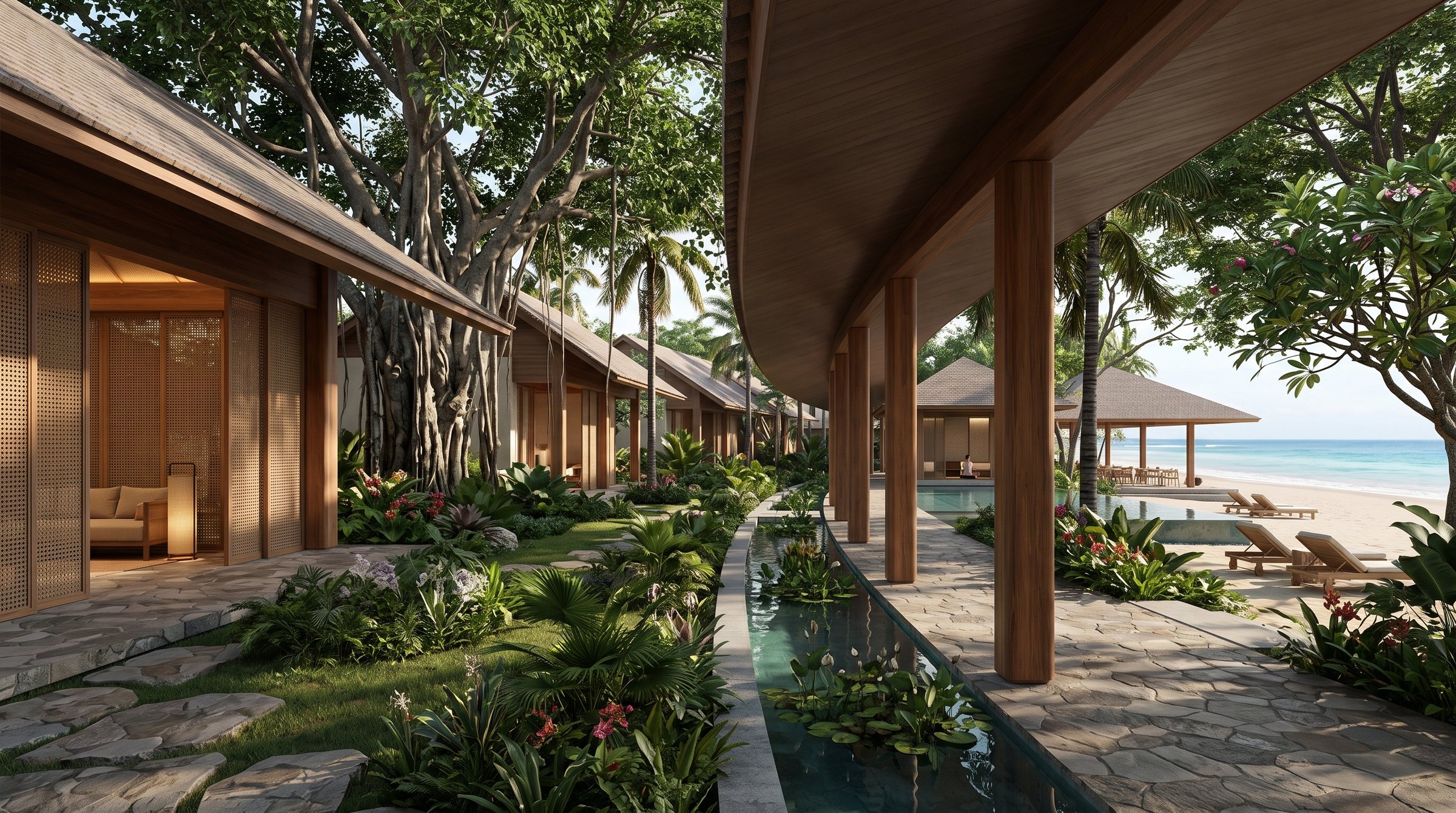
Seminyak has no shortage of beachfront resorts; what it lacks is room to breathe between them.
Seminyak is mature, dense and relentlessly commercial. Its aging beachfront resorts sit on some of the most valuable land in Bali, many of them underused, cluttered and visually tired. This design resists the obvious response. Instead of maximising density, it restores the landscape: unnecessary hardscape is removed, vegetation returns, circulation is reorganised and the property acquires a quieter, more refined identity. Existing buildings are upgraded rather than replaced. The result is a green pocket in a dense tourist district — calm rooms, shaded gardens, discreet restaurants, a low-rise beach pavilion and wellness spaces. It is a commercial repositioning dressed as a garden, and it works precisely because the surroundings will not do the same.
| Location | Seminyak, Bali, Indonesia — mature beachfront tourism zone |
|---|---|
| Site | Aging beachfront resort property — existing buildings, degraded gardens, ocean frontage |
| Programme | Garden hotel with upgraded rooms, garden villas, beach pavilion restaurant, spa, yoga studio, pool and event lawn |
| Identity | Tropical garden modernism — a green pocket in a dense district, positioned as quiet premium |
| Context | Concept for underused beachfront assets in mature Bali zones; no specific property, and any real repositioning would require ownership verification and Indonesian licensed consultants |
| Stage | Concept design — architecture, structure, MEP, BIM |
Reclaim the garden first.
§03 — Masterplan strategyThe plan moves guests from urban arrival to garden calm to beach, and rebuilds the property's value in that sequence.
Hardscape comes out and vegetation goes back in. Public and private zones separate cleanly, existing buildings are upgraded where possible, and a refined low-rise pavilion takes the ocean edge. A wellness layer — spa, yoga, pool, quiet garden rooms — completes the repositioning, while service access, staff routes, waste and deliveries are rationalised out of guest view.
Reclaim the garden
Unnecessary hardscape is removed and vegetation restored across the property. The garden becomes the primary material of the resort — its cooling system, its privacy screen and its identity.
Urban to beach, in order
Public and private zones are clearly separated so guests transition from urban arrival to garden calm to beach — a deliberate sequence rather than a lobby and a corridor.
Reuse the buildings
Existing rooms, public areas and structures are upgraded where possible rather than replaced. Renovation is phased so parts of the hotel can remain operational throughout.
The beach pavilion
A refined, low-rise dining and lounge structure holds the ocean edge with restraint — the property's public face to the beach, deliberately smaller than its neighbours.
Wellness and operations
Spa, yoga studio, pool and quiet garden rooms add the wellness layer, while service access, staff routes, waste and deliveries are rationalised into clear back-of-house circuits.
The Garden Arcade.
§04 — The iconic pieceA long shaded walkway that is both the resort's circulation and its identity.
The Garden Arcade is a long shaded walkway running through the property, connecting arrival, lobby, gardens, villas, spa, pool and beach in one continuous line. Timber columns carry deep roofs over stone floors; water edges, planted courtyards and filtered light accompany the route. It is circulation and identity at once — the spine every guest uses daily and the image the property is remembered by, without a single tower or gesture toward the skyline.
The Arcade is low-rise, repetitive and simple to build: a timber post-and-beam system on stone plinths, deep roof overhangs for shade and rain, and straightforward drainage along its water edges. It can be constructed in phases alongside a partially operational hotel, which is precisely how the renovation is planned.
Architecture, engineering, ecology.
§05 — The technical layersThe garden as material
Tropical garden modernism in a quiet premium register: shaded pavilions, garden rooms and low-rise architecture in warm timber, natural stone, mineral plaster and woven screens, with clay and terracotta used subtly. The landscape itself is treated as the project's main material.
Phased, while operating
A condition survey and structural assessment ground the renovation, which is phased so parts of the hotel may remain operational. Façade and roof upgrades, waterproofing and drainage redesign address the coastal environment; fire safety and accessibility are brought up to standard.
Cooling by landscape
The restored garden does the environmental heavy lifting: landscape cooling, shaded circulation and passive ventilation for public spaces. Water-efficient planting, greywater reuse, solar on service roofs, improved room envelopes, efficient low-noise cooling and a waste management upgrade complete the system.
Documenting a live hotel
Phased renovation of an operating property demands disciplined documentation: existing conditions modelled, guest and service circulation mapped, MEP replacement sequenced zone by zone. BIM coordinates the upgrade so each phase closes cleanly before the next opens.
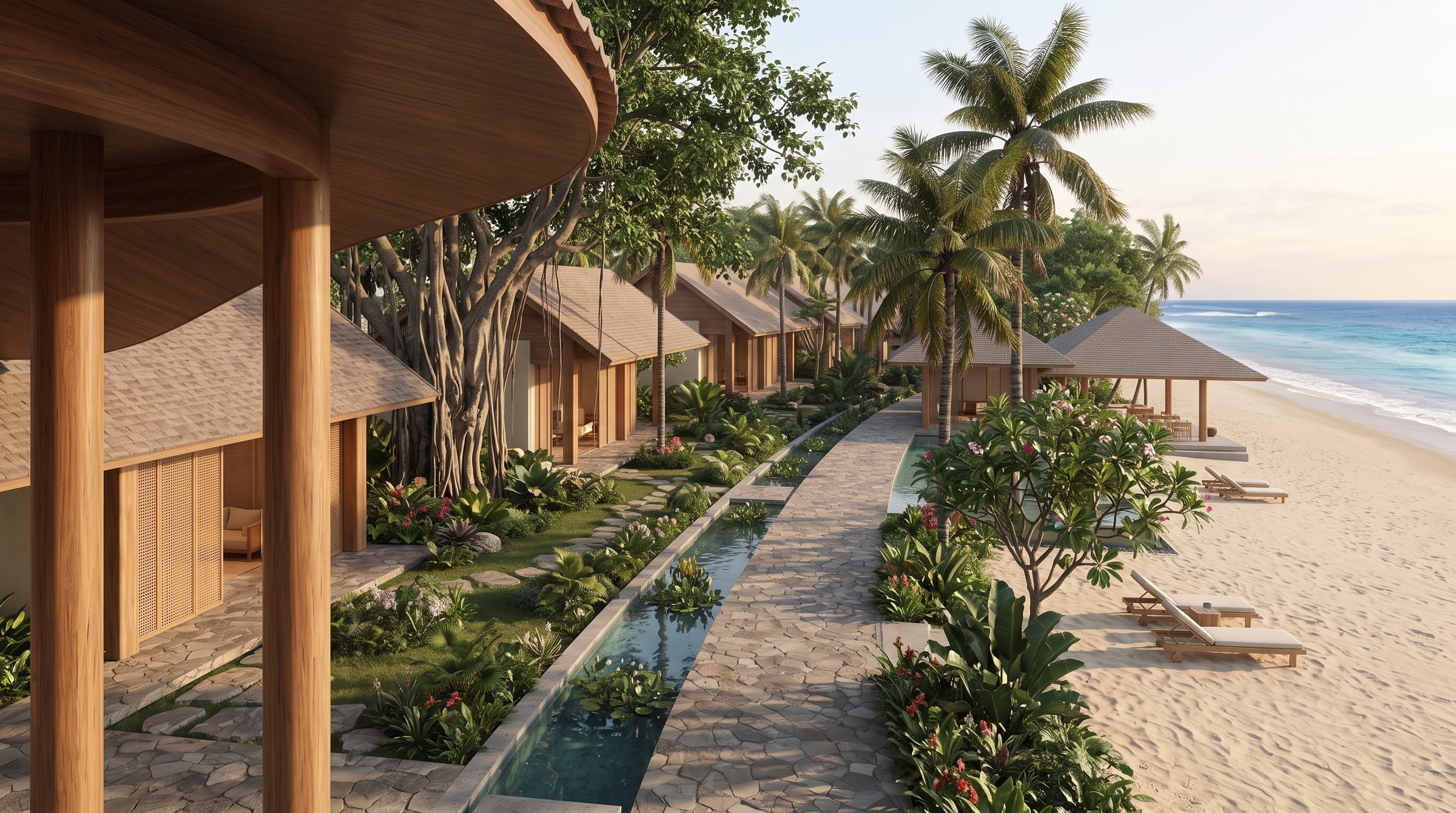
In a district that built everything, the remaining luxury is a garden.
Mature-market repositioning is a discipline of restraint — phasing, operations and landscape over gesture. This design trains the studio's judgement about what not to build. This is a concept for underused beachfront resort assets in mature Bali tourism zones, not tied to any specific Seminyak property. No commission or affiliation exists; a real repositioning would require ownership verification, zoning review and Indonesian licensed consultants.
If a project here became live, we would work as the technical partner alongside the licensed local consultants who carry statutory responsibility in the jurisdiction — the architect of record, structural checkers, MEP and utilities engineers, and the environmental, coastal and fire specialists the approvals require. Our role is design, structural engineering, MEP coordination, BIM and construction-oriented documentation.