Santo Lagoon Airstrip Retreat
A design for Urelapa Island near Espiritu Santo: a grass airstrip, a freshwater lagoon and a reef edge, organised into one expedition retreat.
URELAPA · ESPIRITU SANTO · VANUATU
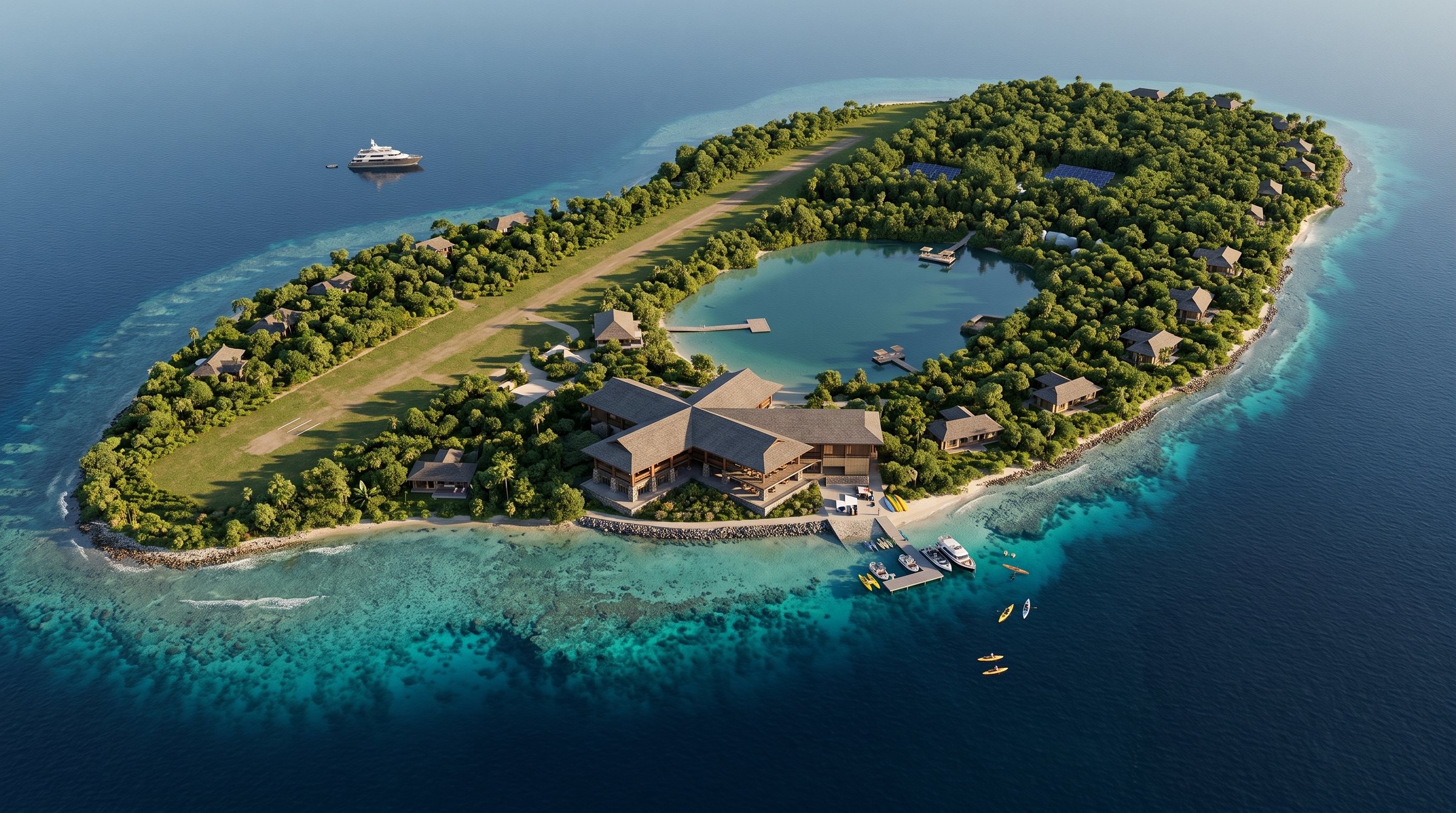
Urelapa holds three rare assets in fifty-odd hectares: an airstrip, a freshwater lagoon and a living reef.
Urelapa appears publicly listed as an island opportunity of around 56–57 hectares off Espiritu Santo, reached from Luganville, with beaches, reef, a freshwater lagoon and an existing or former grass airstrip. Three elements organise the whole concept. The airstrip handles arrival and emergency access, restored only if technically and legally viable. The freshwater lagoon is the island's interior identity, treated as ecology first and never as a default marina. The reef and sea edge carry the adventure: diving, surf, expedition programming. Villas sit between lagoon and sea with serious cyclone design, and the retreat is meant to feel wild but controlled, technical but natural. In Vanuatu, that balance is the brief.
| Location | Urelapa Island, Espiritu Santo area, Vanuatu |
|---|---|
| Site | Approx. 56–57 hectares; beaches, reef, freshwater lagoon and an existing or former grass airstrip |
| Programme | 25–45 keys mixing expedition and wellness; dive and surf operations on the sea side |
| Identity | Airstrip arrival, protected lagoon interior, adventure reef edge |
| Status / Context | Appears publicly listed; lease title, DEPC environmental process and community consultation would govern development |
| Stage | In-house resort design — architecture, structure, MEP, BIM |
Airstrip, lagoon, reef.
§03 — Masterplan strategyThree natural systems set the plan, and each keeps its own rules.
The airstrip is cleared and restored only after technical and legal review, doubling as emergency access for the island. The freshwater lagoon is handled as ecology first, protected from contamination and from the casual assumption that it should hold boats. Dive and surf operations are controlled on the sea side. Villas take the ground between lagoon and sea with storm and cyclone design throughout, and fuel, staff and emergency systems sit near arrival, screened from guests.
Airstrip Review
The grass airstrip is an asset only if aviation review says so. Restoration follows technical and legal viability checks, and the strip doubles as the island's emergency access — a serious consideration in cyclone country.
Lagoon Protection
The freshwater lagoon is the island's rarest feature and its most fragile. It is treated as ecology first: protected from contamination, buffered from development and explicitly excluded from marina thinking without full study.
The Adventure Edge
Diving and surf operate from a controlled sea-side base, keeping boats, compressors and boards on one managed edge while the lagoon interior stays still. Expedition programming launches from here, with weather calls made in the briefing room.
Villas Between Waters
Villas occupy the ground between freshwater lagoon and open sea, each aspect earning a different room. Storm and cyclone design governs the typology; seismic and tsunami awareness shape siting and evacuation routes.
Screened Service Ground
Fuel, staff facilities, utilities and the emergency and weather systems cluster near arrival, screened by planting. Compact service ground keeps response fast and keeps the working island out of the guest's frame.
The Lagoon Air House.
§04 — The iconic pieceA hybrid pavilion set between airstrip, freshwater lagoon and sea.
The Lagoon Air House is arrival hall, expedition base and social centre in one: lounge, restaurant, expedition room, dive and surf centre, spa deck, lagoon terrace, equipment stores and an emergency and weather room. It borrows its temperament from aviation — briefings, charts, weather — and its atmosphere from the lagoon it overlooks. Guests land, are briefed, and step out towards whichever water suits the day.
Timber over concrete and stone plinths, marine-grade steel and cyclone-rated roofing follow Vanuatu's conservative coastal practice. The pavilion is low-rise, modular and repairable, with its emergency room built to shelter standards, reflecting the island's cyclone, seismic and tsunami exposure.
Architecture, engineering, ecology.
§05 — The technical layersVanuatu expedition modernism
Robust tropical roofs, timber, woven screens and shaded glass over stone and concrete bases. Practical luxury: rooms built for gear, weather and long stays, with the polish in the details instead of the gestures.
Cyclone, seismic, tsunami
Low-rise structures with cyclone-resilient detailing, concrete and stone plinths and marine-grade steel connections. Seismic design and tsunami awareness inform siting and evacuation routes, and the emergency and weather room is engineered as the island's hard point.
Lagoon kept clean
Autonomous power, water, wastewater and waste systems keep the freshwater lagoon uncontaminated, with no dredging or marina works without full study. Foreshore works need a written consent path, and DEPC environmental processes with an EMMP are assumed.
Feasibility before form
Runway feasibility, expedition logistics, resilient back-of-house planning and water and waste systems are modelled early. Modular construction is documented for barge and air delivery, and emergency planning is documented alongside the architecture, in the same model.
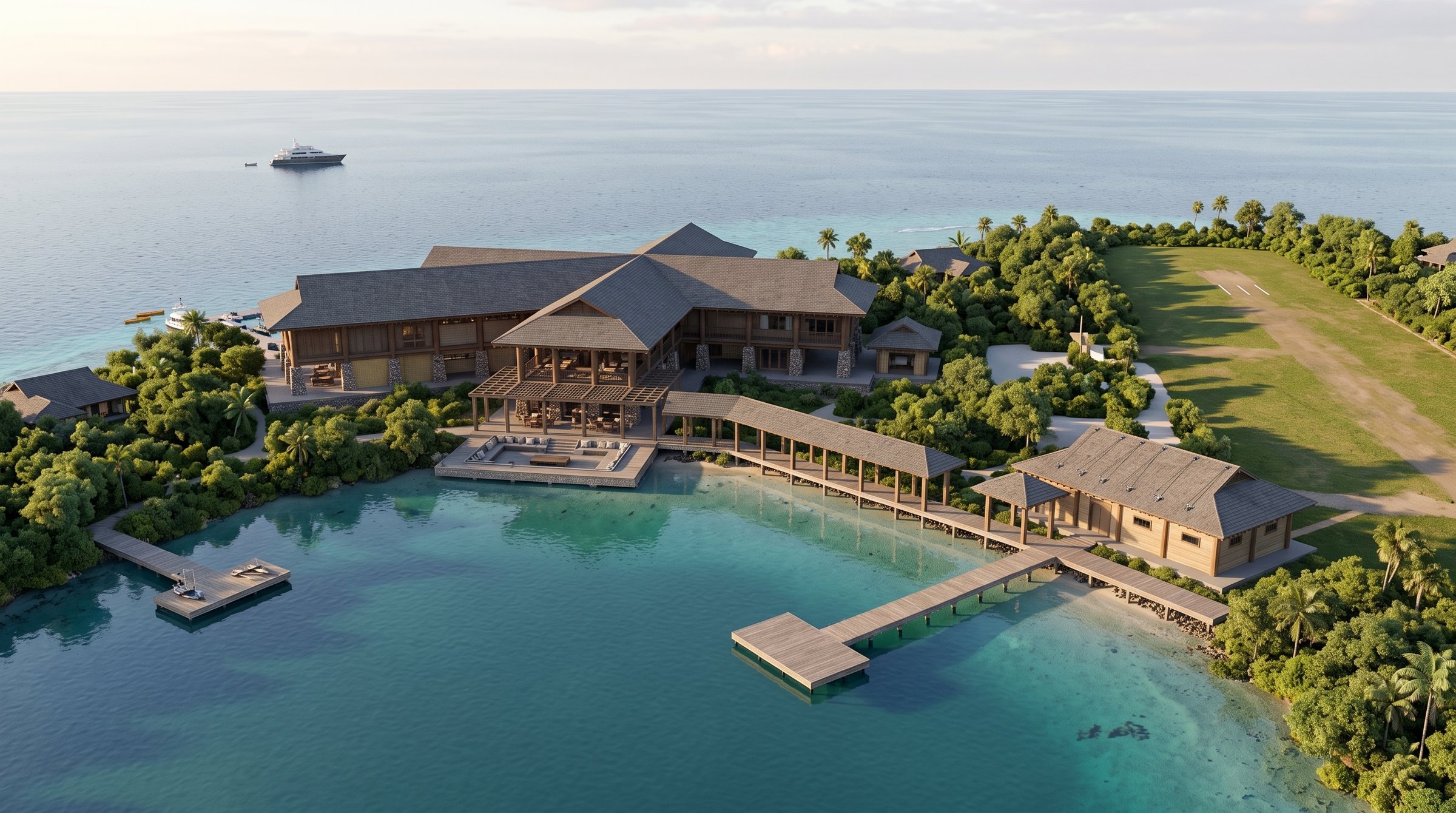
Wild but controlled, technical but natural.
Urelapa pairs aviation feasibility with ecology-first planning on a small island. Holding both disciplines in one concept is exactly the range the studio wants to demonstrate. Urelapa is privately held and appears publicly listed; this concept is independent and unaffiliated with any owner, broker, community or Vanuatu authority. Lease title, customary land rights, DEPC environmental processes, community consultation and aviation approvals would govern any real project.
If a project here became live, we would work as the technical partner alongside the licensed local consultants who carry statutory responsibility in the jurisdiction — the architect of record, structural checkers, MEP and utilities engineers, and the environmental, coastal and fire specialists the approvals require. Our role is design, structural engineering, MEP coordination, BIM and construction-oriented documentation.