Katafanga Blue Lagoon Completion Resort
A completion resort design for a partially built Fijian island: one finished villa, nineteen unfinished, a formed runway and a turquoise lagoon, re-planned as one coherent asset.
KATAFANGA · LAU GROUP · FIJI
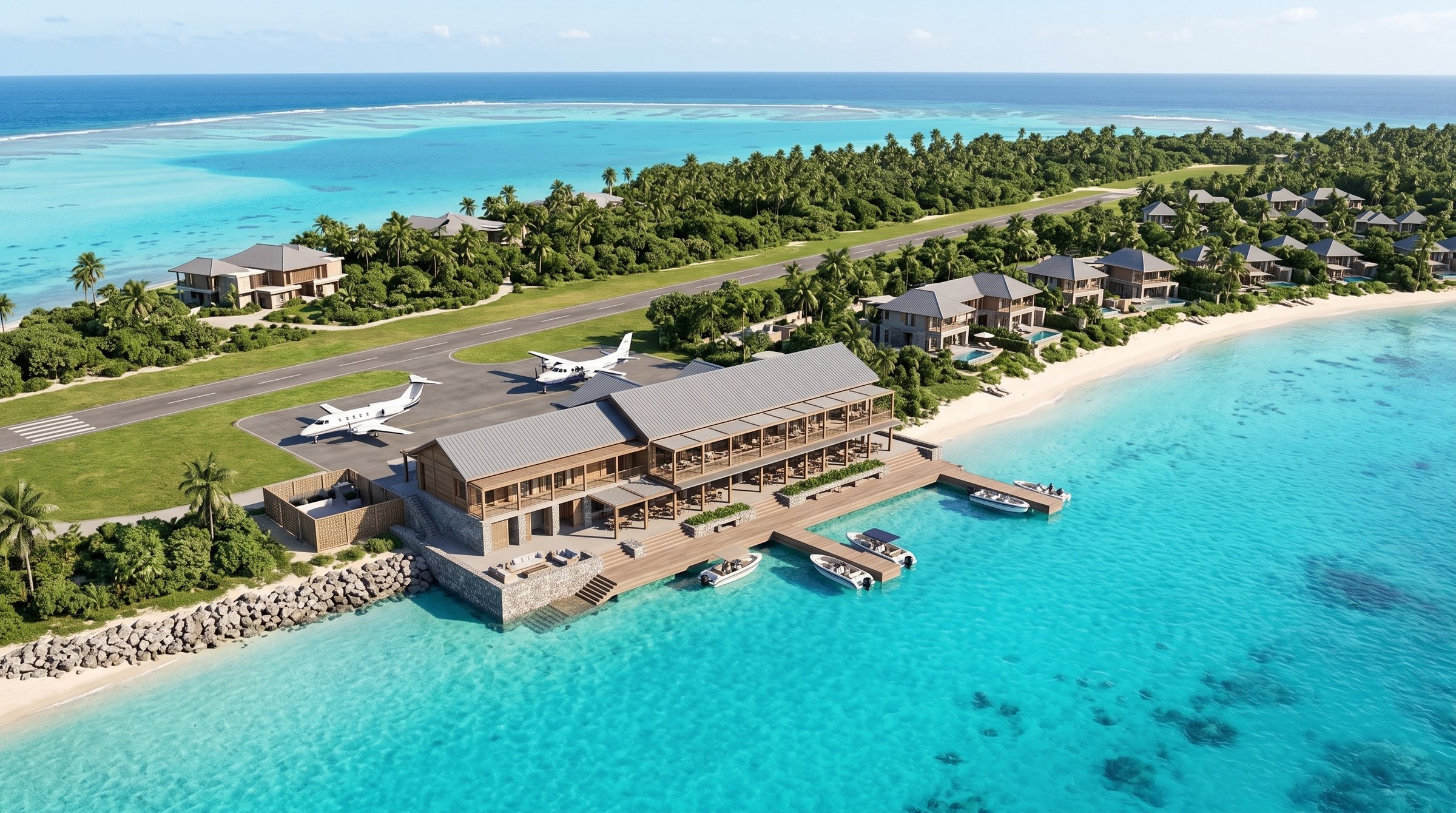
Katafanga was started by someone else; the discipline is in how it gets finished.
Katafanga, in Fiji's Lau Group, appears publicly listed as 225 freehold acres, partially developed: one completed villa, nineteen partially constructed, a formed runway, primary infrastructure substantially in place, and a large turquoise lagoon with a natural reef opening for yacht access. Started projects fail twice — once when construction stops, and again when a new owner finishes them badly. The project's premise is complete less, complete better. Every structure is audited and classified: finish, adapt, strengthen or remove. Villa typologies are redesigned around what stands. The runway is reactivated only after aviation and safety review; the lagoon arrival is developed only if environmentally and navigationally acceptable. Utilities are rationalised into one spine, and one central club replaces scattered, unfinished ambitions.
| Location | Katafanga Island, Lau Group, Fiji |
|---|---|
| Site | 225 acres, freehold, partially developed; large turquoise lagoon with natural reef opening |
| Existing assets | One completed villa, 19 partially constructed villas, formed runway, primary infrastructure substantially in place |
| Programme | 40–80 keys or villas subject to audit; private aviation and yacht arrival; phased completion |
| Status / Context | Appears publicly listed as available; existing permits, EIA screening and foreshore review would govern continuation |
| Stage | Concept design — architecture, structure, MEP, BIM |
Complete less, complete better.
§03 — Masterplan strategyThe masterplan is a triage: classify what stands, then finish only what deserves finishing.
The sequence is deliberate. Audit the completed and partially built villas; classify each structure; redesign the villa typologies around the survivors. Repair and activate the runway only after aviation review. Open a small yacht and tender arrival through the existing reef opening only if studies allow. Rationalise water, power and waste into a single service spine, keep wastewater out of the lagoon entirely, and concentrate social life in one club instead of scattering it.
Villa Audit
All nineteen partially constructed villas plus the completed one are structurally surveyed and classified: finish, adapt, strengthen or remove. Corrosion and moisture surveys decide more here than any design gesture, and the classification drives the whole programme.
Runway Arrival
The formed runway is the island's rarest asset and its most regulated one. It is repaired and activated only after aviation safety review and approvals; until then it shapes the plan without carrying a single flight.
Lagoon Arrival
A small yacht and tender arrival uses the natural reef opening only if it proves environmentally and navigationally acceptable. No dredging, no widening; the reef sets the terms of entry, and the plan accepts them.
The Central Club
One strong social heart replaces the scattered, half-built fabric. The Lagoon Runway Club concentrates arrival, dining and social life so the island reads as finished even while outer phases continue around it.
The Service Spine
Runway, villas, back-of-house, water, power and waste connect along one rational spine. Phasing is planned to avoid stranded assets — the defining failure mode of the island's first attempt.
The Lagoon Runway Club.
§04 — The iconic pieceAn arrival and social pavilion holding the island's unusual pairing: a runway on one side, a lagoon on the other.
The Lagoon Runway Club sits between the two arrivals, gathering a private aviation lounge, owner lounge, restaurant, yacht club and spa threshold into one building. Guests landing by air and guests arriving by water meet in the same shaded rooms. The pavilion turns Katafanga's oddity — an airstrip beside a turquoise lagoon — into its identity, giving the completed resort a centre the original project never had.
Engineered timber over stone and concrete bases, cyclone-rated roofing and marine-grade metal keep the structure within proven Fijian outer-island practice. The building is phased alongside the villa completion programme, so the social heart opens early and anchors the operation while work continues elsewhere.
Architecture, engineering, ecology.
§05 — The technical layersCompletion modernism
The design language accepts what exists: strong roofs, tropical timber, stone bases, shaded glass and woven screens, applied to redesigned villa typologies. Luxury here is completion quality — junctions resolved, surfaces that last, no visible improvisation.
Audit-led engineering
Due diligence begins with structural condition surveys of twenty villas in various states, corrosion and moisture mapping, and cyclone-upgrade strategies for everything retained. Value engineering decides where strengthening beats demolition, structure by structure.
Protect the lagoon
No wastewater reaches the lagoon; treatment and reuse are designed accordingly. The reef and its natural channels are protected as navigation and ecology in one, and utilities are rationalised into a single spine with phased capacity.
Scan, model, sequence
A BIM scan-to-model of the existing works underpins the completion strategy: classification of structures, redesigned typologies, runway and MEP coordination, construction logistics for a remote island, and phasing that keeps every completed asset in service.
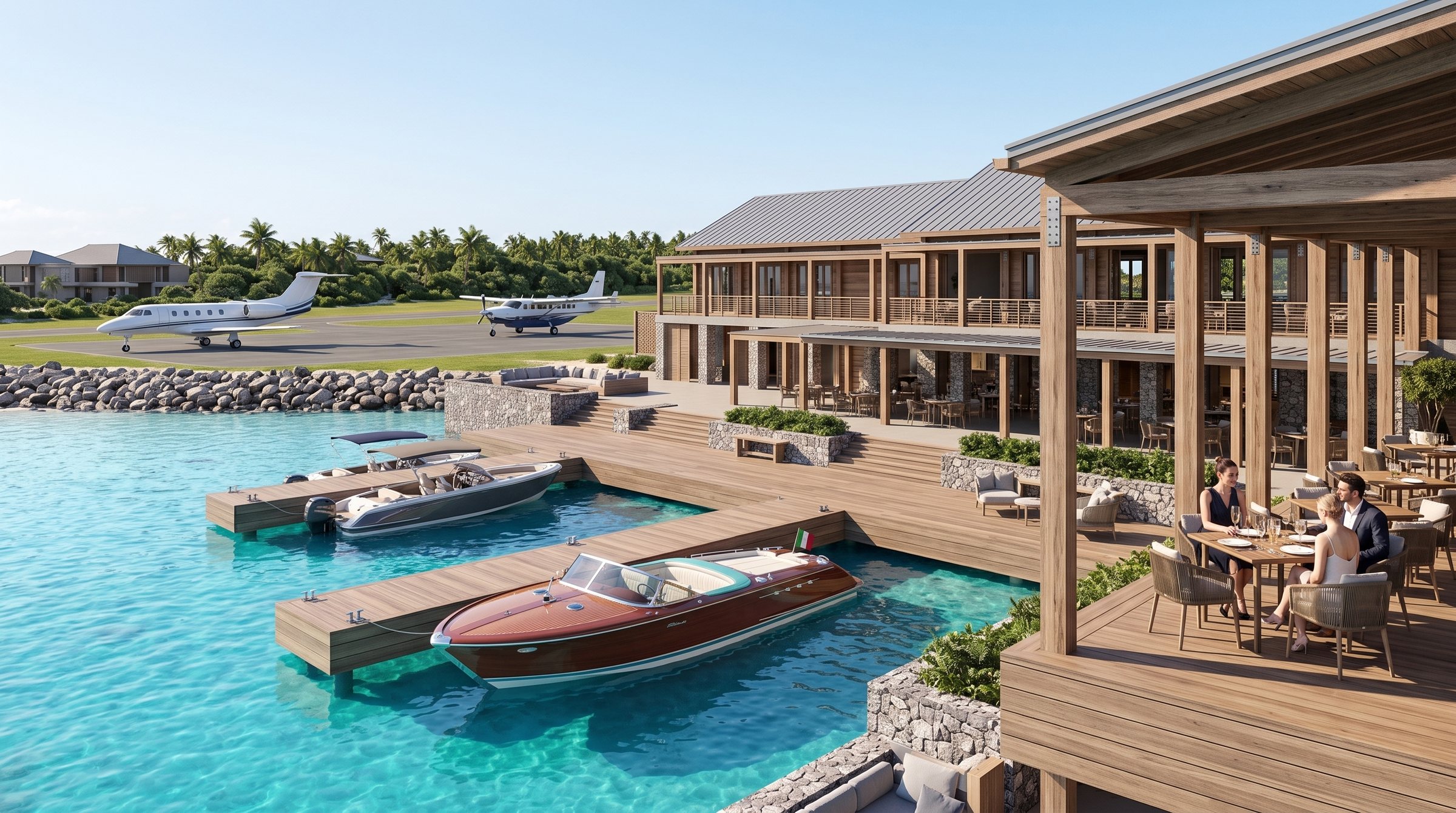
An unfinished island fails twice; the second failure is optional.
Completion work compresses the studio's whole method into one brief: audit, classify, redesign, phase. It is the strongest engineering concept in the series for exactly that reason. Katafanga is privately owned and appears publicly listed; this concept is independent and unaffiliated with any owner, broker or Fijian authority. Continuation would require verification of existing permits, EIA screening, foreshore review and aviation approval for the runway.
If a project here became live, we would work as the technical partner alongside the licensed local consultants who carry statutory responsibility in the jurisdiction — the architect of record, structural checkers, MEP and utilities engineers, and the environmental, coastal and fire specialists the approvals require. Our role is design, structural engineering, MEP coordination, BIM and construction-oriented documentation.