Five Bays Eco Estate
An eco-estate design for Tivi Island, Fiji, where five natural bays become five distinct experiences and one bay is deliberately left alone.
TIVI ISLAND · FIJI
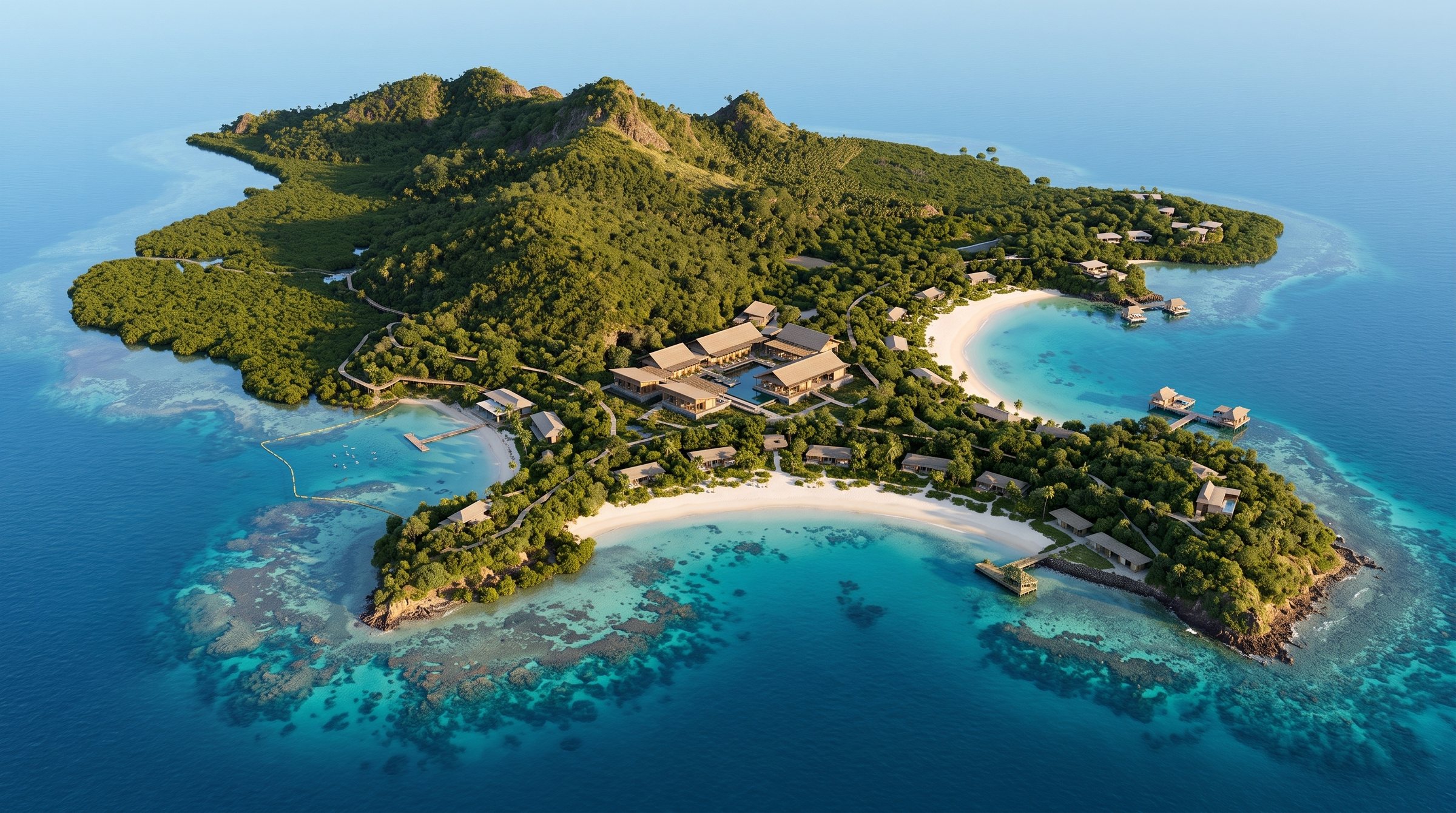
Tivi's masterplan was drawn by the coastline: five bays, five purposes.
Tivi Island appears publicly listed as roughly 150 freehold acres close to Fiji's mainland: undeveloped, with five bays, beaches, mangroves, reef access and a freshwater spring. The geography does the planning. Each bay takes a role: Arrival Bay for tender landing and reception; Family Bay for the calm beach, family villas and pool; Wellness Bay for spa, yoga and the most secluded villas; Marine Bay for diving, snorkelling and reef education; Conservation Bay left untouched as mangrove and habitat. The freshwater spring is treated as a strategic asset with a budget, and the mangroves as protected landscape. The result is an estate whose narrative a guest can grasp from the map alone.
| Location | Tivi Island, Fiji |
|---|---|
| Site | Approx. 150 acres, freehold, undeveloped; five bays, mangroves, reef access, freshwater spring, close to the mainland |
| Programme | 30–50 keys with several private villas; phased eco-estate with strong conservation zones |
| Identity | Five bays, five experiences: arrival, family, wellness, marine life and conservation |
| Status / Context | Appears publicly listed as available; EIA screening and foreshore review would govern jetty and coastal works |
| Stage | In-house resort design — architecture, structure, MEP, BIM |
Five bays, five purposes.
§03 — Masterplan strategyEach bay is given one job, and one bay is given none.
Each bay is developed — or protected — according to its character, so the estate avoids the generic beachfront strip. Roads are kept minimal in favour of walking paths and light buggy routes. Back-of-house is compact, hidden and efficient. The freshwater spring is managed within a water balance rather than treated as unlimited, wastewater and greywater have a full strategy, and one bay is left entirely untouched as the estate's permanent margin.
Arrival Bay
Tender arrival and reception occupy one bay only, keeping boats, fuel and luggage handling away from the swimming beaches. No large marina appears in the concept; foreshore works wait on lease and permit review.
Family & Wellness Bays
Two bays, two tempos. Family Bay takes the gentle beach, family villas and pool; Wellness Bay takes the spa, yoga and the most secluded villas. Separation by bay replaces separation by fence.
Marine Bay
Diving, snorkelling and reef education operate from one managed waterfront in Marine Bay. Concentrating boats, compressors and equipment on a single edge keeps the other beaches free of engines and makes nearshore water quality accountable.
Conservation Bay
One bay is left untouched: mangrove, habitat and shoreline protected outright. It is a planning decision, an ecological one, and the estate's best long-term marketing, in that order of importance.
Water & Services
The freshwater spring is metered into a water balance and never assumed unlimited. Wastewater and greywater have a full treatment strategy, back-of-house stays compact, and services follow the paths already being walked.
The Five Bays Forum.
§04 — The iconic pieceThe central island house where guests first grasp the five-bay logic.
The Five Bays Forum is the estate's common ground: reception, restaurant, lounge, nature room, island map room, water court, market table and a community craft table under one set of low, shaded roofs. It works as an orientation device as much as a dining room; the island's map is the decoration, and each bay's programme radiates from here on foot or by buggy.
Low pavilions of timber on stone bases, cyclone-rated roofs and marine-grade fixings keep the structure simple, repairable and within Fijian coastal practice. Modular villa typologies developed for the bays share components with the Forum, easing construction logistics from the nearby mainland and simplifying maintenance for the life of the estate.
Architecture, engineering, ecology.
§05 — The technical layersFiji eco-estate language
Low pavilions, deep shade, timber, woven screens and lime plaster: family-friendly and still premium. Cyclone-rated roofs sit low against the treeline, buildings hold back from mangrove edges and dunes, and no bay is given a continuous built frontage.
Simple, cyclone-rated, repairable
Timber structures on stone bases with cyclone-rated roof systems and marine-grade fixings throughout. Low-rise only. Modular villa types repeat across the bays with local adaptation, keeping construction feasible for a small island close to the mainland.
Spring, mangrove, reef
Water balance studies size every use of the freshwater spring. Wastewater and greywater treatment protect the reef and nearshore water quality, mangroves hold protected status, and EIA screening is assumed for the jetty, utilities and any coastal work.
Bay-based phasing
The estate is documented bay by bay: modular villa families, service route coordination, mangrove setback planning and eco-infrastructure masterplanning in one coordinated model, so each phase opens complete and no bay is disturbed ahead of need.
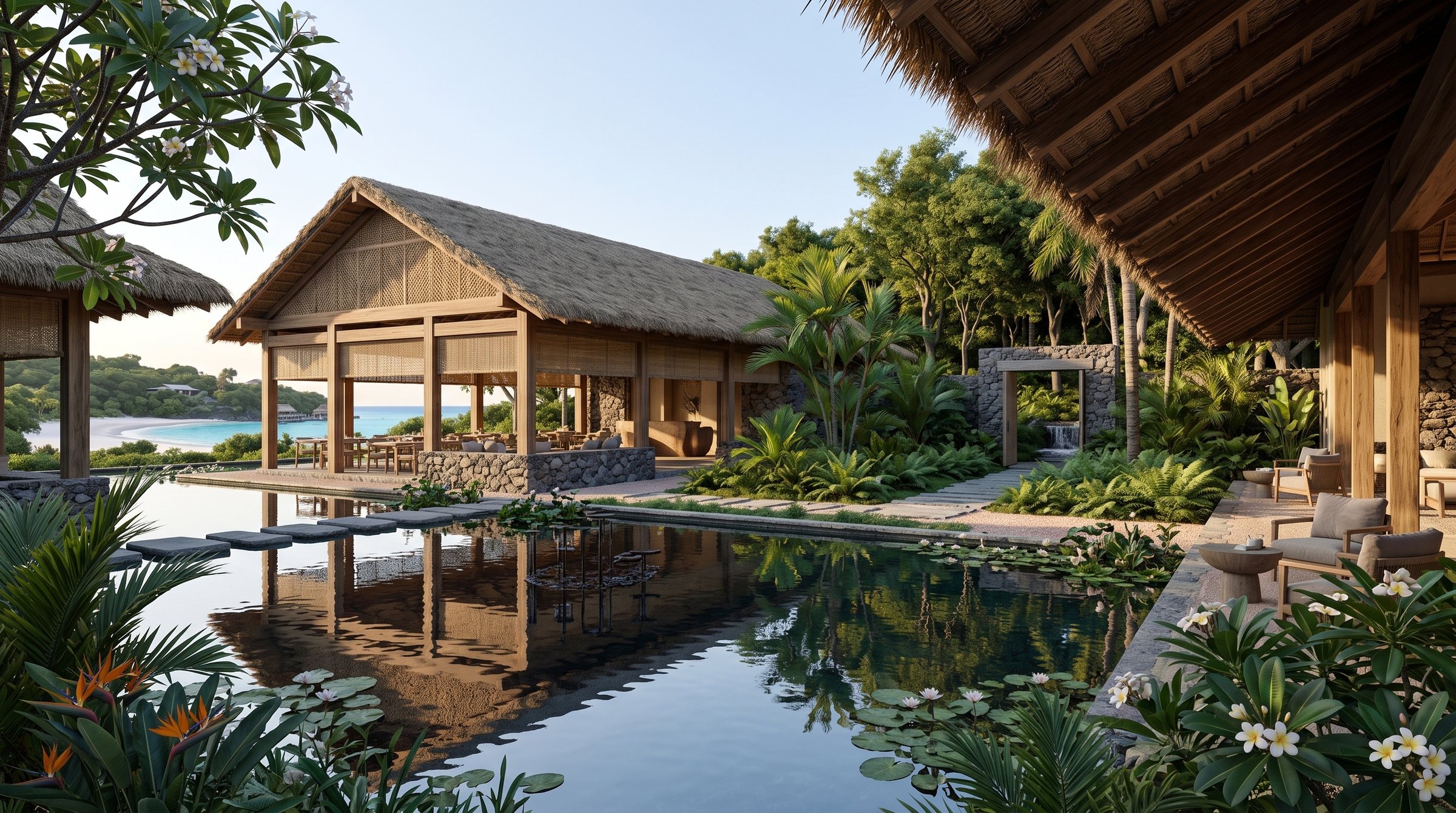
The coastline drew the masterplan first.
Tivi tests whether ecology-led planning can stay commercially legible: five bays, one water budget, one untouched margin. Constraint used as a masterplanning tool. Tivi Island is privately owned and appears publicly listed; this concept is independent and unaffiliated with any owner, broker or Fijian authority. EIA screening, foreshore lease review and protection of the mangroves and freshwater spring would govern any real development.
If a project here became live, we would work as the technical partner alongside the licensed local consultants who carry statutory responsibility in the jurisdiction — the architect of record, structural checkers, MEP and utilities engineers, and the environmental, coastal and fire specialists the approvals require. Our role is design, structural engineering, MEP coordination, BIM and construction-oriented documentation.