Bedugul Highland Ruins Retreat
A resort design transforming abandoned mountain resort structures in Bali's highlands into a wellness, art and retreat destination. The old concrete frame stays. Everything else is repair.
BEDUGUL · BALI HIGHLANDS
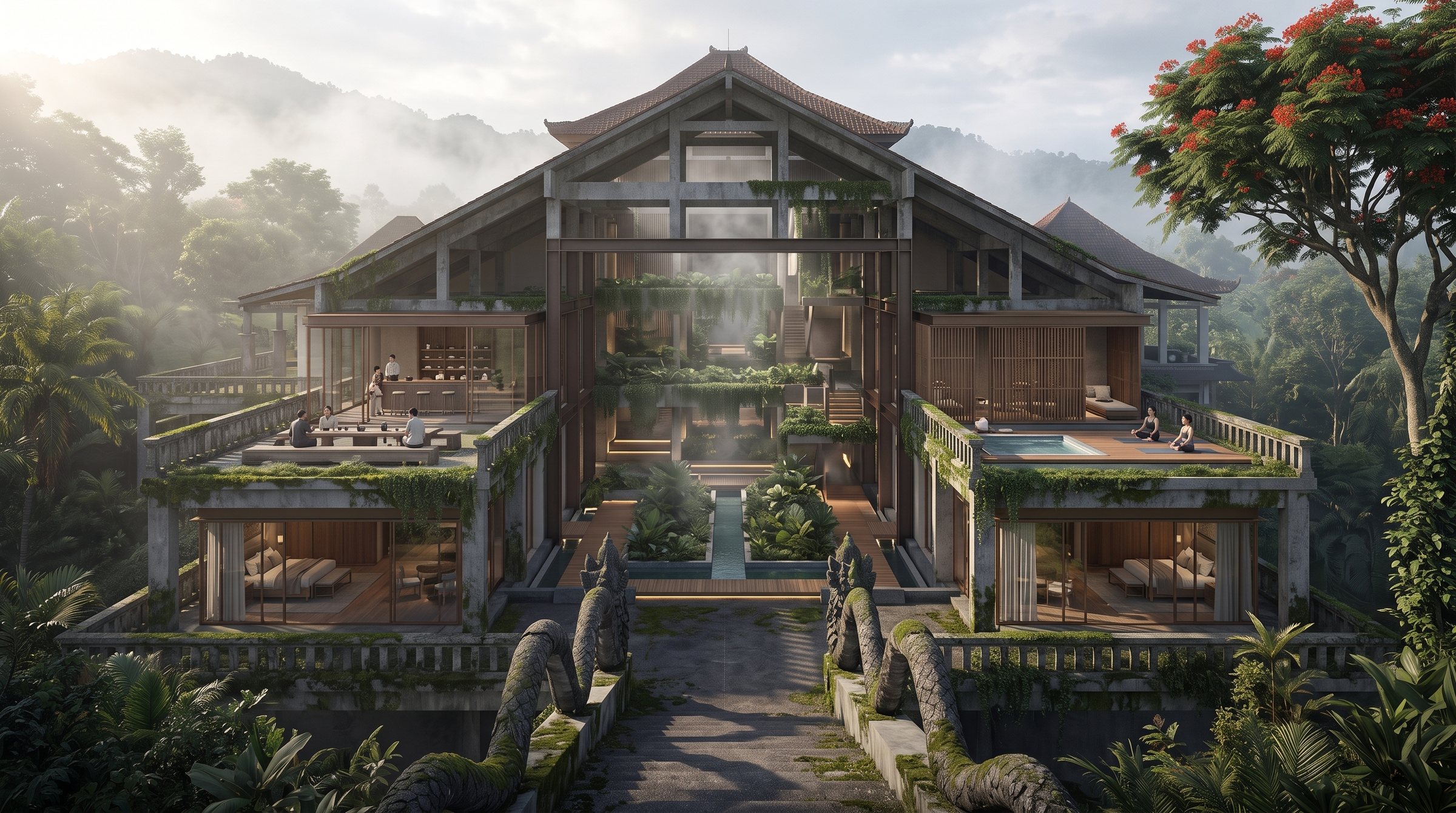
In the Bedugul highlands, an abandoned hotel frame has been standing in the mist for years — half ruin, half invitation.
Bali's mountain interior holds a well-known typology: the large highland hotel, built with ambition and then abandoned, its concrete frame slowly claimed by moss, rain and vegetation. This design asks what happens if that frame is not demolished but kept as the memory of the project. The structure is assessed, repaired and selectively cut open. Timber rooms, glass garden galleries, spa pavilions, water courts and suspended decks are inserted with restraint. The highland climate does most of the environmental work; the architecture organises mist, filtered light, water and silence into a layered wellness retreat. This is not a beach resort. It is an architecture of repair, built around what the mountain has already half-reclaimed.
| Location | Bedugul highlands, Bali, Indonesia |
|---|---|
| Site | Abandoned mountain hotel structure in highland forest terrain |
| Programme | Wellness retreat with spa, hydrotherapy, art gallery, 60–90 rooms/suites and a limited number of forest villas |
| Identity | Highland wellness, art and retreat destination built on adaptive reuse |
| Context | Concept design for the abandoned highland hotel typology; no specific property is proposed and any real project would require zoning review, ownership verification and local licensed consultants |
| Stage | Resort design — architecture, structure, MEP, BIM |
A retreat organised in layers.
§03 — Masterplan strategyThe masterplan works from the ruin outward: arrival, core, terraces, rooms, paths, and a service spine that stays out of sight.
The existing structure becomes the public heart of the retreat, with wellness terraces stepping along the slopes and guest accommodation split between converted suites and lightweight forest villas. Circulation is slow by design: forest paths link gardens, ruins and viewpoints, while deliveries, kitchens, laundry and staff movement run along a hidden spine behind the main building.
Arrival plateau
A calm arrival court rather than a hotel drop-off. Guests leave the road behind and enter the retreat through gardens, shade and the first view of the repaired structure.
Ruin core
The existing abandoned hotel structure is reused as the main public building. Reception, dining, gallery and lounges occupy the repaired frame, keeping its weathered concrete as the project's memory.
Wellness terraces
Spa, thermal pools, yoga decks and meditation rooms follow the terraces and slopes, taking their temperature and stillness from the highland climate rather than fighting it.
Rooms and villas
Existing rooms are combined into larger suites within the frame. A limited number of lightweight forest villas are inserted around the landscape, structurally independent of the old building.
Paths and service spine
Slow walking routes thread through gardens, ruins and viewpoints. Deliveries, kitchen, laundry, waste and staff circulation run behind the main structure, invisible to guests.
The Mist Atrium.
§04 — The iconic pieceA central abandoned volume, cut open and turned into a vertical garden — the symbolic heart of the retreat.
One of the ruin's central volumes is opened to the sky and transformed into a vertical garden atrium. Mist, filtered light, hanging vegetation and water channels move between the existing concrete columns. The space holds the arrival lounge, reception, a tea bar, an indoor tropical garden and art installations, with bridges and galleries crossing above. View corridors open toward the valley; spa and guest wings connect at its edges. Water and sound do the rest.
The atrium works because the frame already exists. Structural assessment, corrosion repair, selective strengthening and a seismic upgrade make the old columns dependable; new bridges and galleries are lightweight timber and steel insertions, independent of the original structure where needed. Drainage, slope stabilisation and a clear egress strategy complete the engineering picture.
Architecture, engineering, ecology.
§05 — The technical layersHighland brutalism, softened
Functional modernism built on adaptive reuse: weathered concrete, dark volcanic stone, warm timber, bronze metal and glass set deep in shade. Tropical highland brutalism softened by moss, water mirrors and planting — architectural rather than touristic, dramatic without raising its voice.
Repair before insertion
The engineering sequence starts with a structural assessment of the existing frame, then concrete and corrosion repair, selective strengthening and seismic upgrade. New lightweight roofs and timber-steel insertions stand independent of the old structure where needed, with drainage and slope stabilisation securing the terrain.
The climate does the cooling
The highland climate provides passive cooling; the existing structure provides thermal mass. Natural ventilation, rainwater harvesting, greywater reuse for the landscape, solar on service roofs and landscape-based stormwater management make sustainability infrastructure, not decoration.
A model of what exists
Adaptive reuse lives or dies on documentation. The design is structured as a BIM problem: recording the existing frame, mapping repair zones, coordinating new insertions against old geometry, and zoning MEP efficiently through a building that was never designed for it.
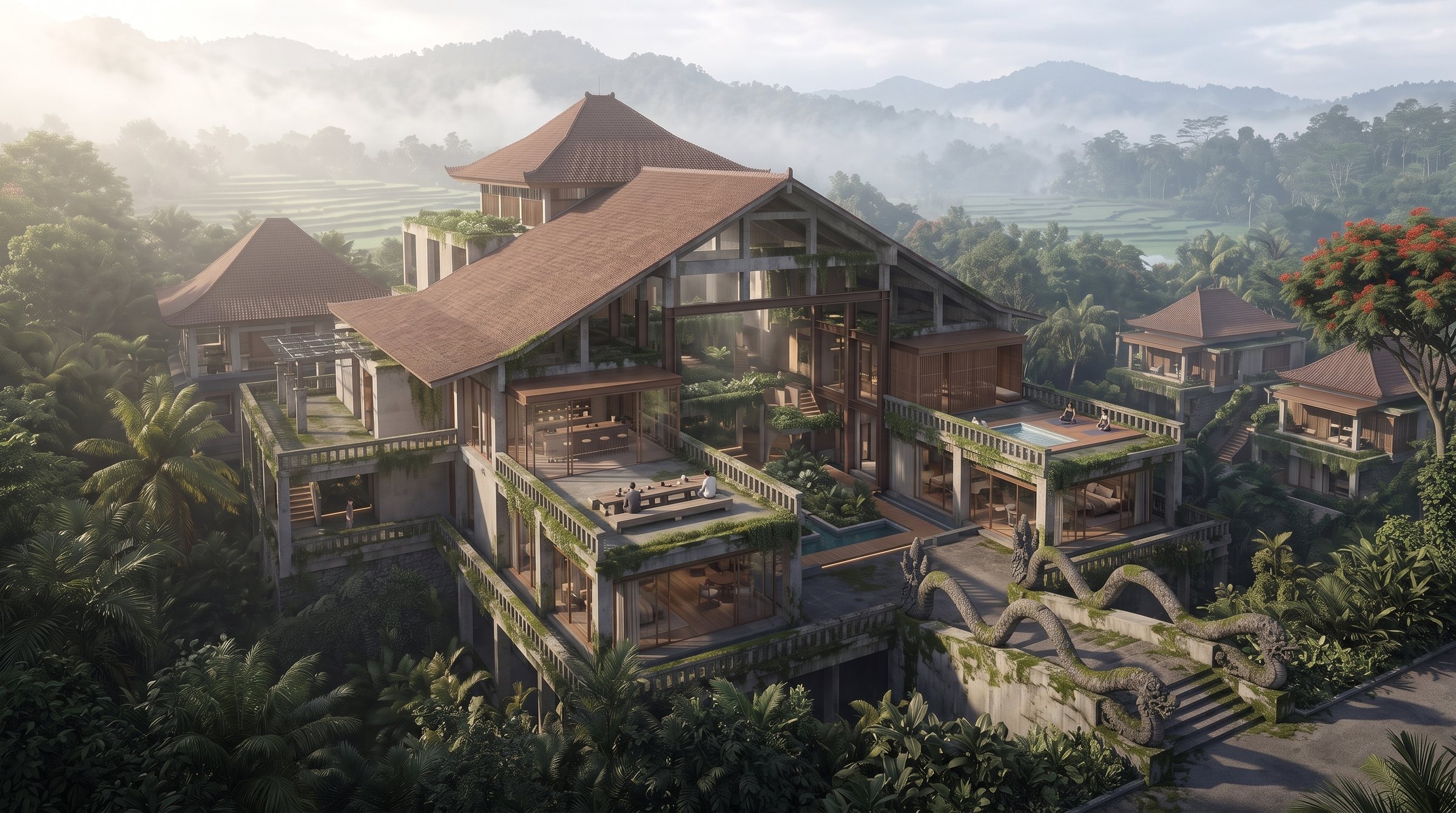
The strongest move on this site is the one that keeps the building standing.
Every discipline the studio practises — structural assessment, retrofit engineering, MEP coordination, BIM — converges in one ruin. It is the clearest test of designing with what already exists. This is a concept design for the abandoned highland hotel typology in Bedugul; no specific property is proposed. It is not commissioned, approved or affiliated with any owner, operator or authority; a real project would require ownership verification, zoning review, community consultation and Indonesian licensed consultants.
If a project here became live, we would work as the technical partner alongside the licensed local consultants who carry statutory responsibility in the jurisdiction — the architect of record, structural checkers, MEP and utilities engineers, and the environmental, coastal and fire specialists the approvals require. Our role is design, structural engineering, MEP coordination, BIM and construction-oriented documentation.